21 Baby Shower Games: Easy Ideas & Free Printables
Choose from 21 baby shower games and activities, with rules, suggested timings, materials and a free printable pack with quiz sheets, keepsake cards and host answers.
In this guide

One free printable pack
The best baby shower games give people something to share: a surprising answer, a good laugh or a few words the parents will want to keep.
You do not need a room full of props or an afternoon packed with competitions. Pick two or three games that suit your guests, explain the rules clearly and leave time for the conversations that start between rounds.
Here are 21 games and activities, from quick table quizzes to team challenges and keepsake cards. Each has a suggested player count, time, materials and a way to finish. The free printable pack gives you ready-made sheets for nine of them, with fixed-answer quiz keys for the host.
Still planning the rest of the celebration? Our baby shower at home guide covers seating, food, styling and a sample afternoon schedule.
Choose by your guest list
Find the game that fits the afternoon.
| Game or activity | Suggested players | Suggested time | Preparation |
|---|---|---|---|
| 01 · Guess the baby photo | 4-20 | 10 minutes + reveal | Simple household props |
| 02 · Who knows the parents best? | 4-24, solo or pairs | 10-15 minutes | PDF p. 2 |
| 03 · The baby-name alphabet | 2-20, solo or pairs | 5-8 minutes | PDF p. 3 |
| 04 · Baby-word anagrams | 2-24 | 5-8 minutes | PDF p. 4 |
| 05 · Finish the nursery-rhyme title | 2-24 | 5-10 minutes | PDF p. 5 |
| 06 · Match the baby animal | 2-24 | 5-8 minutes | PDF p. 6 |
| 07 · Guess the socks in the jar | Any guest-list size | 2 minutes each; reveal later | Simple household props |
| 08 · What's in the baby bag? | 4-12 | 10 minutes | Simple household props |
| 09 · The disappearing memory tray | 4-24 | 8-10 minutes | Simple household props |
| 10 · The baby-basket price quiz | 4-24, solo or teams | 10 minutes | Simple household props |
| 11 · Higher or lower? | 4-30 in teams | 8-10 minutes | Simple household props |
| 12 · Baby shower bingo | 4-30 | During optional gift opening | PDF p. 7 |
| 13 · Finish the parents' phrase | 4-24 in teams | 10 minutes | Simple household props |
| 14 · Two truths and a childhood tale | 4-12 | 10-15 minutes | Simple household props |
| 15 · The baby-word chain | 4-20 in two teams | 5-8 minutes | Simple household props |
| 16 · Draw a baby in one line | 4-24 | 5-8 minutes | Simple household props |
| 17 · Invent a baby-kit advert | 6-24 in small teams | 10-15 minutes | Simple household props |
| 18 · Build a bedtime story | 4-12 per circle | 8-12 minutes | Simple household props |
| 19 · A little prediction card | Any guest-list size | 5 minutes whenever it suits | PDF p. 8 |
| 20 · Wishes for the little one | Any guest-list size | 5 minutes whenever it suits | PDF p. 9 |
| 21 · One good tip for the parents | Any guest-list size | 3-5 minutes | PDF p. 10 |
Times and group sizes are planning suggestions, not measured limits. Allow extra time for explaining, marking and the stories people want to tell. On a phone, swipe across the table.
Easy icebreakers
Start around the table
Written rounds and familiar faces make an easy opening. Choose a single quiz or combine two short rounds for guests who enjoy a challenge.
Guess the baby photo
A wall of tiny faces gives guests something to talk about before everyone has settled into the same conversation. It works especially well when the guest list brings together friends, family and colleagues.
- Ask willing guests for a childhood photo before the shower. Number the copies and keep a private list matching each number to its owner.
- Display the photos together. Give everyone ten minutes to write their guesses; let people work in pairs if several guests have not met.
- Reveal the answers one at a time and invite the owner to share a short story if they would like.
Scoring: One point per correct person. Share the win if scores are tied.
A useful detail: Use only photos people have agreed to display. Keep the collection off social media unless each person has agreed to that too.
Who knows the parents best?
The best questions let guests discover something new about the parents without needing to know their whole life story. A mix of easy facts and unexpected favourites keeps it fair.
- Before the day, ask the parents to answer the ten questions on page 2 of the printable pack. They can swap any question they would rather skip.
- Read the questions aloud or hand out the sheets. Give pairs a few minutes to compare guesses without using phones.
- Read out the agreed answers. Let the parents add the story behind an answer when they feel like it.
Scoring: One point for each answer matching the parents' key. Agree acceptable alternatives before marking.
A useful detail: Avoid medical details, private family matters and questions that reveal a baby name the parents are keeping to themselves.
The baby-name alphabet
Almost no setup, plenty of conversation and a fair chance for guests of different ages: this is an easy first round while people are sitting at the table.
- Give each player or pair an alphabet sheet. The aim is to write one first name beginning with each letter.
- Set a five-minute timer. Names from any language count; guests can leave difficult letters blank and return to them.
- Read out a few favourites after the timer. Make clear that the answers are for the game, not a shortlist the parents have to consider.
Scoring: One point per completed letter with a recognisable first name. Accept different spellings; agree on unusual answers together.
A useful detail: For a relaxed version, remove the timer and ask each table to complete one shared sheet. For a trickier round, stick to unisex names. Quinn will get you past Q.
After the round, our baby names guide is a useful next read if the list starts a longer conversation.
Baby-word anagrams
A written puzzle is useful when you want a game that can start quietly and finish with a little cheering. The pack includes twelve baby-related words and a separate host answer key.
- Hand out page 4 face down so everyone starts together. Explain that every scramble makes one baby-related word.
- Turn the sheets over and allow five minutes. Players can work in pairs if you want more conversation than competition.
- Ask players to swap sheets for marking, then read the twelve answers from the host page.
Scoring: One point per correctly unscrambled word. Ignore a minor spelling slip if the intended answer is clear.
A useful detail: Read the scrambles aloud or offer paired play for anyone who finds small print or written puzzles difficult.
Finish the nursery-rhyme title
A familiar title with one word missing makes a simple table quiz. Expect different generations to remember different rhymes, which is a good reason to mix up the teams.
- Give out the twelve-title sheet on page 5. Guests fill in one missing word in each title.
- Allow five minutes, or read each clue aloud and give teams a short pause to answer.
- Use the host key to mark the sheets. There is no need to sing the answers unless the group volunteers.
Scoring: One point per correct missing word. Accept a familiar regional title if the host agrees it fits the clue.
A useful detail: This sheet uses English-language nursery rhymes. Choose a different round if most guests would not know them.
Match the baby animal
Most people know a puppy and a kitten. A young swan or owl can take a little more thought. This is an easy quiz to play in pairs around one table.
- Print page 6, which lists twelve adult animals and a shuffled bank of baby-animal names.
- Ask guests to match each animal with one answer from the bank. Each answer is used once.
- Read the correct pairs from the host key, giving teams a moment to check each line.
Scoring: One point per correct match, for a maximum of twelve.
A useful detail: For children joining an adult group, pair them with someone who can help read the clues.
Guessing games
A little suspense, very little fuss
These games use things you can show, hide or count. Prepare the answers before guests arrive so the host can enjoy the reveal too.
Guess the socks in the jar
Set this up beside the drinks and it becomes an arrival activity rather than another interruption to the afternoon. A jar of socks is useful afterwards too, if the parents would like them.
- Count individual socks into a clear jar before the party. Write down the total privately; specify that the answer is socks, not pairs.
- Ask each guest to submit one estimate without opening the jar. Keep guesses hidden until everyone has had a chance.
- Reveal the number before the party finishes. Count the socks out together if guests want to check.
Scoring: The closest estimate wins, whether above or below the total. Equal distances share the win.
A useful detail: Borrow socks or check what the parents need before buying a whole collection for one game.
What's in the baby bag?
A muslin, bib and tiny sock feel surprisingly different when you cannot see them. Keep this round seated so the bag can move easily from person to person.
- Put six familiar items in a bag, such as a bib, muslin, sock, vest, soft washcloth and teething ring. Record your exact list.
- Give each person about thirty seconds to feel inside without looking or removing anything. They then write their six guesses.
- When the bag has completed the circle, lay the items on the table and reveal the answers.
Scoring: One point for each correctly identified item. Accept a clear description if someone does not know its name.
A useful detail: Use clean, unwrapped items with no sharp edges. For a larger group, prepare one matching bag per table.
The disappearing memory tray
This is the visual partner to the bag game. Choose one of the two for a short shower, or use both as separate rounds of a team challenge.
- Arrange ten recognisable baby-related objects on a tray and show it to everyone for one minute.
- Cover the tray completely. Give guests two minutes to write down as many objects as they can remember.
- Uncover the tray and read the list. Keep the objects where everyone can see them during marking.
Scoring: One point for each item on the tray, up to ten. Do not deduct points for extra guesses.
A useful detail: Use distinct objects rather than several very similar socks or bottles. Offer a closer look before the timer for guests who need it.
The baby-basket price quiz
A price quiz works best with real items and a clear answer key. It also gives you a useful alternative to a game based on personal facts about the parents.
- Choose six essentials, such as wipes, a muslin and a pack of nappies. Record each item's price in pounds and pence from the same shopping trip or dated online basket.
- Show the exact pack sizes without visible price labels. Ask guests to write a price for each item.
- Reveal the recorded prices, then ask teams to add their guesses to estimate the total basket cost.
Scoring: Award one point to the closest guess for each item. Use the closest basket total as a tie-break.
A useful detail: Say whether you used sale prices and use those prices consistently. This is a party quiz, not a prediction of what a baby will cost.
Higher or lower?
If your guests would rather call out a quick answer than fill in a sheet, turn the price quiz into a higher-or-lower round. It needs only one host and a short list.
- Choose six to eight baby items and record the actual price and pack size for each. Prepare a deliberately higher or lower price to read out.
- Show an item and announce your invented price. Teams decide whether the recorded price is higher or lower than the figure you gave.
- Ask teams to show a written H or L together, then reveal the real price before moving on.
Scoring: One point for each correct higher-or-lower answer. Use an extra item if you want a final tie-break.
A useful detail: Choose this or the basket quiz if time is short; they use similar skills and do not both need a place in the schedule.
Baby shower bingo
Bingo gives guests something to follow during gift opening, but it only belongs on the plan if the parents want to open presents in front of everyone.
- Before any gifts are opened, give guests the blank grid on page 7. They write one likely gift in each of the twenty-four empty boxes, with no repeats.
- As presents are opened, guests cross off matching boxes. Agree that a broad word such as 'clothes' will not cover every item; use specific categories such as bib or sleepsuit.
- The first person to complete a horizontal, vertical or diagonal line calls bingo. Check the five boxes together.
Scoring: The centre square is free. One checked line wins; continue for a full house only if the group wants to.
A useful detail: If gifts will be opened privately, use a different game. Nobody needs to bring a present in order to join the shower.
Team games
Make room for a few good laughs
Pick these when the group enjoys talking, inventing or working together. Give people a partner and the option to pass; enthusiasm is more useful than a perfect performance.
Finish the parents' phrase
A phrase-completion round is quick to explain and easy to personalise. The fun comes from finding out whether guests think along the same lines as the parents.
- Ask the parents to finish six phrases beforehand. Try 'A perfect Sunday is...', 'Our favourite takeaway is...' and 'The first book we would like to share is...'.
- Read each starter and let teams write the ending they think the parents gave.
- Reveal the original answers. Agree whether a close equivalent counts before moving to the next question.
Scoring: One point for an exact answer or an agreed equivalent.
A useful detail: Choose topics the parents are happy to share. Do not use this round to reveal names or plans they have kept private.
Two truths and a childhood tale
This is a good option when a few guests enjoy telling stories. Childhood hobbies, unusual pets and old favourite foods provide plenty of material without asking anything intrusive.
- Invite willing players to prepare three short childhood statements: two true and one invented. Let anyone pass.
- Each player reads their three statements. The rest of the group agrees which one they think is the invented tale.
- The player reveals the answer and can add a short story. Limit the round to a few volunteers for a larger shower.
Scoring: Award one point per correctly spotted tale, or play simply for the stories.
A useful detail: Ask for light, comfortable memories. Nobody should have to explain a difficult childhood experience to keep the game moving.
The baby-word chain
A spoken word chain needs no printing and can fill a short gap while the kettle boils. Teams make it easier for quieter guests to contribute without taking a solo turn.
- Choose the category 'things connected with babies'. The first team says a word; the next team gives a new word beginning with the last letter of the previous answer.
- For example: pram, muslin, nappy. Allow fifteen seconds per answer and no repeated words within a round.
- If a team gets stuck, award the other team a point and start a fresh chain with a new word.
Scoring: Play five short rounds. The team with the most points wins; a tied result can stay tied.
A useful detail: Keep a written list of used words. Accept familiar regional words and agree on borderline answers as a group.
Draw a baby in one line
You do not need to be good at drawing for this one. The single-line rule makes everyone's picture a little unexpected, which is the whole point.
- Give each guest a sheet of paper and ask them to draw a baby without lifting the pen from the page.
- Allow ninety seconds. Guests can add details wherever the continuous line takes them, but there are no restarts.
- Display the pictures without names. Let willing guests give their drawing a title before the group looks around.
Scoring: Vote for categories such as most inventive or best expression. Use several playful awards instead of ranking artistic skill.
A useful detail: Keep the drawing on the table; there is no need for blindfolds or balancing paper on anyone's head.
Invent a baby-kit advert
A tiny sock can become the star of a very grand sales pitch. This suits a group that enjoys wordplay, especially if you let teams read their lines rather than perform.
- Give each team a simple object, such as a bib, sock or washcloth. Their task is to invent a product name, slogan and three-line advert.
- Allow five minutes to write the pitch. Remind teams that the ordinary object stays ordinary; the exaggeration is part of the joke.
- Invite teams to read their advert or nominate the host to read it for them.
Scoring: Let the parents choose a favourite slogan, or give every team a different award.
A useful detail: Keep the joke about the object, not about pregnancy, bodies or anyone's ability to parent.
Build a bedtime story
A shared story leaves the parents with something unusual to read back later. Make it a spoken round with someone taking notes, or pass a page around the table for guests to add their lines.
- Start with a simple sentence such as 'Once there was a tiny bear who found a yellow umbrella.'
- Go around the table, with each willing guest adding one sentence aloud or on the page. Keep contributions short so the story reaches everyone.
- Finish after one complete round. Ask someone to read the full story and give the page to the parents.
Scoring: There is no winner. The completed story is the result.
A useful detail: Write the lines down rather than recording guests without asking. Let people pass or contribute through a partner.
Keepsake activities
Something lovely to keep
Finish with a few words for the family. These three activities have no winners and can stay available while guests talk, eat or take photographs.
A little prediction card
A prediction card gives guests a reason to pause and imagine the little person they will meet. Treat the answers as a keepsake rather than a competition about the pregnancy.
- Place the cards on a side table or beside each setting. Guests can guess a birthday, a future favourite colour and a first adventure to share.
- Leave any prompt optional. Nobody needs private information about the pregnancy to write something thoughtful.
- Collect the cards in an envelope for the parents to open when they choose.
The result: No points are needed. If the parents later want to compare the birthday guesses, that can be their own small follow-up.
A useful detail: The printable avoids weight, birth details and a gender prediction, so it can stay light and open-ended.
Wishes for the little one
This is a lovely option for guests who would rather write than compete. A few specific words often mean more than a long message written under pressure.
- Put the wish cards somewhere guests can reach throughout the afternoon. Each page of the pack makes two cards.
- Invite guests to finish the prompts: 'I hope you discover...', 'One thing we could do together...' and 'A little joy I would like to share...'.
- Ask everyone to sign their card. Gather the messages without reading them aloud unless the writer wants to.
The result: There is no winner. Keep every contribution for the family.
A useful detail: Use a plain envelope or box. Guests can leave a prompt blank and still give a complete, thoughtful card.
The cards can become the start of a memory box, with photographs and a note about the day.
One good tip for the parents
A card of practical encouragement makes a useful final activity. Keep it about support people can offer, rather than a list of rules the parents are expected to follow.
- Offer the cards on page 10 near the end of the shower. The prompts ask for a useful tip, a small thing that helped and a way the guest could lend a hand.
- Explain that advice is optional and should be kind, brief and free from medical instructions.
- Collect the cards with the wishes and predictions. Let the parents read them privately after the celebration.
The result: No scoring. The aim is a little collection of encouragement and practical offers.
A useful detail: An offer to bring dinner or run an errand can be more useful than another opinion. Guests can simply write a message if they have no advice to give.
A small plan for the host
Three activities, with room to talk.
For an eight-person shower, the example below adds about half an hour of activities across the afternoon. Put the photo guesses out when guests arrive, play the quiz after food and leave the wish cards available whenever people feel like writing.
Guess the photo
Guests write guesses while they settle in. Reveal the answers once everyone has arrived.
One short quiz
Choose anagrams, nursery rhymes or baby animals. Allow 5-10 minutes plus marking.
A wish for baby
Leave cards and pens on a side table. Collect the messages before guests go home.
Choose one person to explain each game and keep its answer sheet with them. Put materials in separate envelopes labelled by round, check the number of pens and print one spare player sheet. Decide the tie rule before the game starts; sharing a prize is often easier than adding another round.
Small prizes are enough: a chocolate bar, a notebook or simply a round of applause. Favours are a separate, optional thank you for everyone. If you choose baby shower favours, count the full guest list rather than only the players.
For a mixed-age group, pairs or small teams make reading and guessing easier. For a quiet group, pick written games and leave out performances. For a large shower, divide people into tables and repeat the same short round rather than passing one bag around thirty guests.
A little detail beyond the games
Let the personal touches have a purpose.
The game sheets can be simple. For baby shower gifts, choose a keepsake with a message for the guest of honour; a small favour at each setting is an optional thank you for the guests. Choose the wording with the parents if a name is still private.

For the guests
A small thank you to take home.
Our wooden favours are available as magnets or ribbon keepsakes. Choose the current options and pack size for your celebration, and check the wording before ordering.

For the guest of honour
A message from her people.
A mum-to-be gift can carry a message from friends or family. This wooden mum-and-pram design has a freestanding base, a pink or blue bow and an optional heart-shaped money holder.
Product images show shop designs with example wording and styling. Decorative keepsakes are not toys. Check current options, personalisation and delivery on the product pages.
For a keepsake to use after the birth, our baby announcement sign is a wooden 3D balloon with a raised, hand-painted first name, engraved additional names and a satin ribbon chosen separately. A set of milestone cards can help the family continue their photograph collection through the first year. Confirm any name with the parents before ordering; choose a message for the mum-to-be if the baby's name is still private.
For baby announcement photos, our styling guide covers window light, simple outfits and personal details. The announcement wording guide helps with the words to share alongside the picture. Before ordering a personalised item, our personalisation guide helps you check names, wording and the options you want.
A few useful answers
Baby shower games questions.
How many games should you play at a baby shower?
Two or three is a useful starting point for a relaxed afternoon. Choose fewer if the group would rather talk, and allow time for explaining and marking as well as playing. The sample plan above uses one arrival game, one short quiz and optional wish cards.
What are good baby shower games for a small group?
Guess the baby photo, the parents quiz, the memory tray and a baby-word anagram sheet all work around one table. Pair people up if they do not know each other well. For four guests, a shared story or a conversation around wish cards may be all you need.
Which baby shower games need very little preparation?
The baby-word chain needs a timer, and the one-line drawing round needs only paper and pens. The name alphabet is another quick option if you print the included sheet. Avoid choosing a photo or parents quiz at the last minute; both need information collected beforehand.
Are there free printable baby shower games in this guide?
Yes. The free A4 PDF contains a host guide, a parents quiz, the name alphabet, anagrams, nursery-rhyme titles, baby-animal matching, blank bingo and three keepsake card designs. It includes a host answer page for the three fixed-answer quizzes. No email sign-up is needed.
Can you have a baby shower without competitive games?
Yes. Write wishes, make prediction cards, build a shared story or leave a few words of encouragement. These activities have no winners. A shower can also be a meal and conversation with no planned activities at all.
Do you need prizes for baby shower games?
No. A small prize is optional, and a shared win or a round of applause is enough. If you use prizes, tell guests how scoring and ties work before starting. Favours are an optional thank-you for everyone, rather than a prize only for winners.
How should you print the free game pack?
Print A4 portrait, single-sided, at 100% or actual size. Select only the pages you need, print one player sheet per person or pair, and keep page 11 for the host. Pages 8-10 have two cards each and a trim guide between them.
Make the afternoon your own
Choose a few favourites.
Leave room for the people.
A clear set of rules and a little preparation will do more than a long list of games. Pick the rounds your guests will enjoy, keep the invitation to play open, and let the conversation take its time.
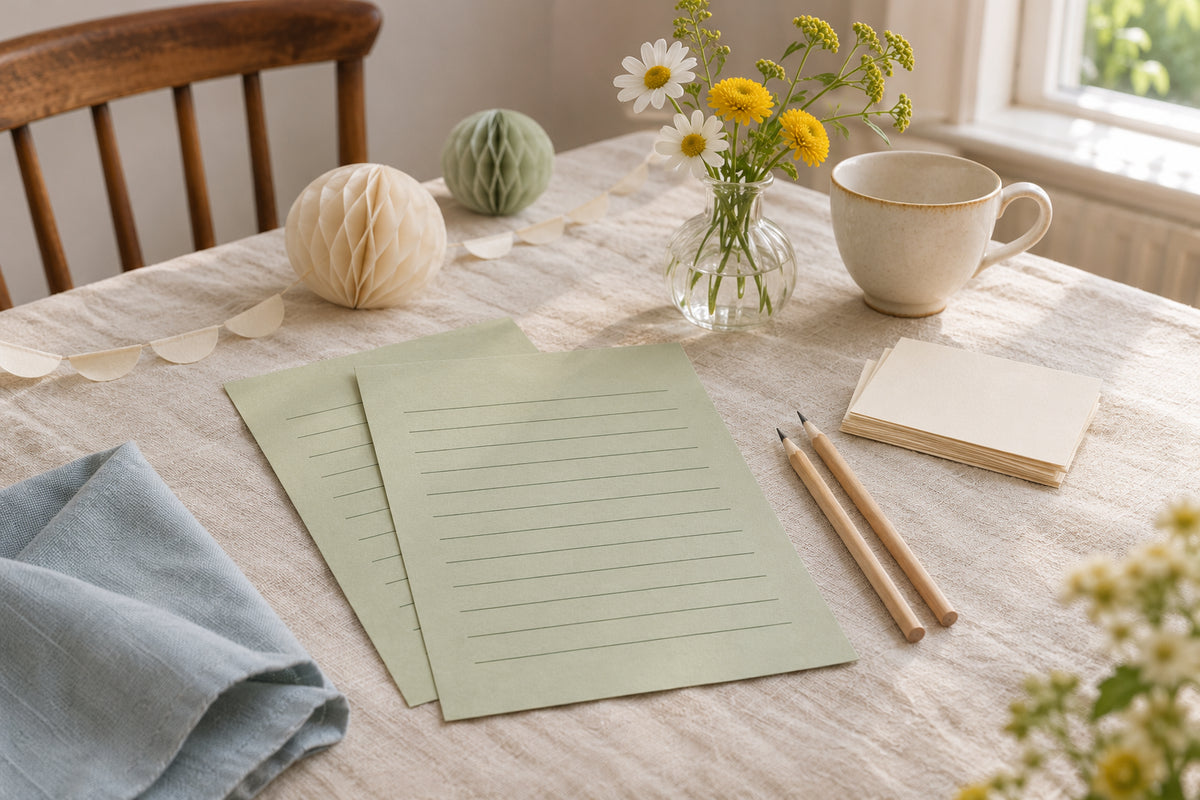
Created by Creative Mama Gift Shop. The opening table image is an AI-created styling concept; the printable preview shows a page from the actual free pack. Product photographs come from our shop galleries. Suggested timings and player counts are planning guides. Free printable sheets are for personal use.



Join the conversation +